
Our Blog | The Business of Charging
The EV Charging Market Has Reached a Turning Point. Now Performance Matters More Than Ever.
The Business of Charging | 11/3/2026

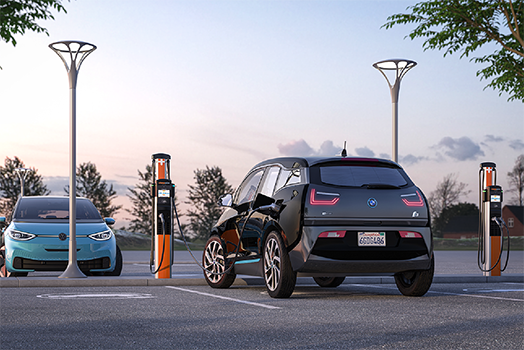
As charging demand accelerates across North America, the industry's next chapter will be defined not simply by how much infrastructure we build, but by how well it performs.
For years, much of the conversation around electric vehicle charging has centered on one question: Are we building enough chargers?
It's an understandable focus. Developing a national charging network requires significant investment, coordination and infrastructure deployment. The number of available charging stations has become one of the most visible measures of progress in the transition to electric transportation.
But the latest industry data suggests it's time to expand that conversation.
According to Paren's Q3 2026 State of the EV Charging Industry research, the United States surpassed 80,000 public DC fast-charging ports during the third quarter, while charging sessions increased 26% year over year to 50.4 million. In Canada, the fast-charging network expanded 26.8% year over year, with charging sessions increasing 37%.
These numbers tell an important story. Public EV charging infrastructure is expanding, and drivers are using it. The more interesting question now is what comes next.
Growth Is Only Part of the Story
Building charging infrastructure at scale is an important achievement, but the number of installed chargers tells us only part of what we need to know about the health of the industry.
A charging station can be installed and operational yet still fail to deliver a consistently positive experience. It may be available but frequently occupied when drivers need it most, underutilized due to low demand, or unable to generate sufficient usage to support a sustainable business model. And while a charging session may be completed successfully, the overall experience can still fall short if reliability, convenience or operational efficiency are lacking.
As the market matures, we need to evaluate infrastructure through a broader lens. Reliability, utilization, energy delivered, operating costs and the overall driver experience are becoming increasingly important measures of success.
Paren's research illustrates why.
In Q3 2026, average U.S. fast-charging utilization reached 15.9%, while Canada's average was 10.4%. These figures reflect markets at different stages of development, but both reinforce an important reality: expanding infrastructure and maximizing the value of that infrastructure are two distinct challenges.
The industry needs to solve both.
Reliability Is More Than an Operational Metric
For EV drivers, reliability is fundamental to confidence. When someone pulls into a charging station, they should reasonably expect to connect, initiate a session and receive the energy they need without unnecessary complications.
That expectation sounds simple. Delivering it consistently across thousands of charging locations, multiple vehicle manufacturers, payment systems and network environments is considerably more complex.
Paren reported a national reliability score of 93.9 in the United States and 91.1 in Canada during Q3 2026. These scores, based on Paren's reliability methodology, demonstrate that there is still room for improvement across the broader charging ecosystem. And while industry reliability metrics are valuable, we should continue looking beyond any single score.
A successful charging experience depends on the entire journey, from finding an available charger to completing a session and receiving an accurate bill. Hardware reliability matters. So do software performance, payment processing, network connectivity, vehicle compatibility and the ability to identify and resolve issues quickly.
The best charging experience is ultimately one that drivers don't have to think about.
Utilization Will Help Define the Economics of Charging
As more charging infrastructure comes online, utilization will become an increasingly important business consideration. For charging site operators, installing equipment is only the beginning. Long-term success depends on understanding when and how chargers are used, managing energy costs and aligning infrastructure investments with actual demand.
This is particularly important because charging needs vary dramatically by location.
A highway travel corridor may experience concentrated demand during peak travel periods. A retail location may see shorter, more frequent sessions. A fleet depot may operate around predictable vehicle schedules, while a workplace charging site may experience extended periods of low demand.
There is no single deployment model that works for every application. The opportunity lies in using data to make better decisions about where chargers are installed, how much power they need and how they should operate. That includes understanding demand patterns, evaluating site economics and using intelligent software to help operators manage their infrastructure more effectively.
The next generation of charging networks will need to be built around real-world usage, not simply projected infrastructure counts.
Software Will Play an Increasingly Important Role
The EV charging industry is often described as a hardware market. In reality, its long-term success will depend on how effectively hardware, software and energy systems work together. Software provides the intelligence needed to monitor charging infrastructure, identify potential problems, manage energy consumption and improve the experience for drivers and operators.
As charging networks grow, these capabilities become more important. A charging operator managing hundreds or thousands of ports needs visibility into performance across locations. Businesses need to understand operating costs and charging demand. Fleet operators need confidence that vehicles will be charged and ready when required. And as higher-power charging becomes more common, intelligent energy management will become increasingly important to managing site capacity and electricity costs.
The industry must think about charging infrastructure as an integrated operating system rather than a collection of individual charging stations.
The Next Chapter of EV Charging
The growth of public charging infrastructure across North America is encouraging. More chargers are becoming available, charging activity is increasing and technology continues to advance.
But the industry's next chapter requires a more sophisticated definition of progress. We should continue celebrating infrastructure expansion while asking harder questions about performance.
Are chargers consistently available when drivers need them? Are operators using infrastructure efficiently? Are charging investments economically sustainable? Can networks adapt as vehicle technology and energy requirements evolve? These are the questions that will shape the future of electric mobility.
The next milestone for EV charging isn't simply how many chargers we install. It's how consistently that infrastructure delivers value to the drivers, businesses and communities that depend on it.
Source: Paren, State of the EV Charging Industry, Q3 2026, United States and Canada. Reliability scores reflect Paren's proprietary methodology.


