
Customer Story
Big Blue Bus electrifies a packed depot without stopping service


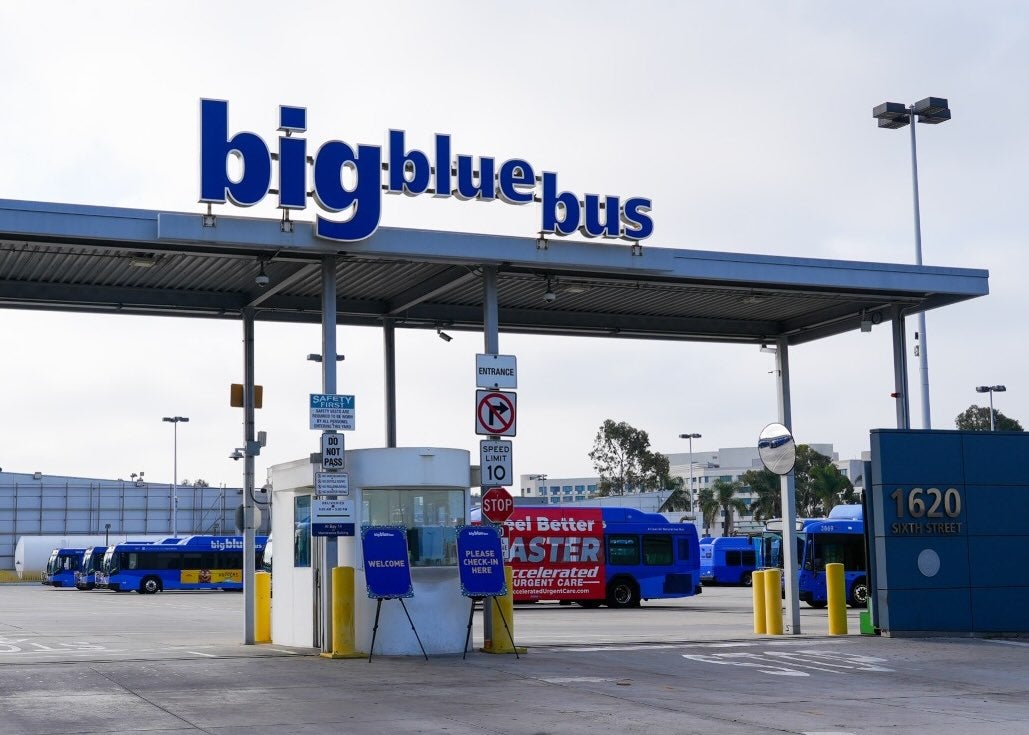
On 12 acres shared by 195 buses, a maintenance shop and a fuel facility, Santa Monica's Big Blue Bus had 19 battery-electric buses in service by 2021. Now it is scaling to 150 ChargePoint charge ports without modifying a building, changing its yard layout or building a new team.
The City of Santa Monica's Big Blue Bus (BBB) is a municipal transit operator serving an urban area of about 58 square miles on the west side of Los Angeles, well beyond Santa Monica's own 8.6-square-mile city limits. It runs 17 routes, provides more than 10 million passenger trips a year and employs more than 450 people. Its annual operating budget is $102 million, and its capital program typically runs $20 million to $30 million a year. The agency is funded through fares and state and federal transit dollars, with no support from the city's general fund.
In other words, Big Blue Bus faces what many agencies face: a fixed budget, a crowded yard and no room to take buses out of service. Today it runs 34 battery-electric buses with reliability comparable to its compressed natural gas (CNG) fleet, and construction is underway on a ChargePoint and Eaton depot buildout that will support 150 charge ports. It has done this without modifying a single building, without significantly changing how buses move through its yard and with just one added staff member. Eric O'Connor, assistant director of the City of Santa Monica's Department of Transportation, shares how the agency did it, what he would do differently and what he'd tell any agency starting today. Prefer to watch? See the full webinar with Big Blue Bus, ChargePoint and Eaton.
Can battery-electric buses handle a full day of service?
Big Blue Bus didn't take anyone's word for it. In late 2018, it received a Federal Transit Administration exemption to buy and test a 40-foot battery-electric prototype, one of the first battery-electric buses to roll off Gillig's assembly line. The agency ran it across its entire system rather than relying on manufacturer data. That prototype was retrofitted to current specifications and has been in service ever since.
In parallel, the agency commissioned an engineering master plan, awarded in 2019 and completed in 2021, with route modeling at its center. The team evaluated every block and run against traffic patterns, operating speeds, topography, weather and actual bus performance. "The objective of the route modeling was simple," O'Connor said. "Could the electric bus complete our existing work without compromising service?" With relatively minor schedule adjustments, the answer was yes, even for the 444-kilowatt-hour bus available in 2018. The modeling also produced charging profiles that estimated daily power and energy needs, which became the basis for the infrastructure design.
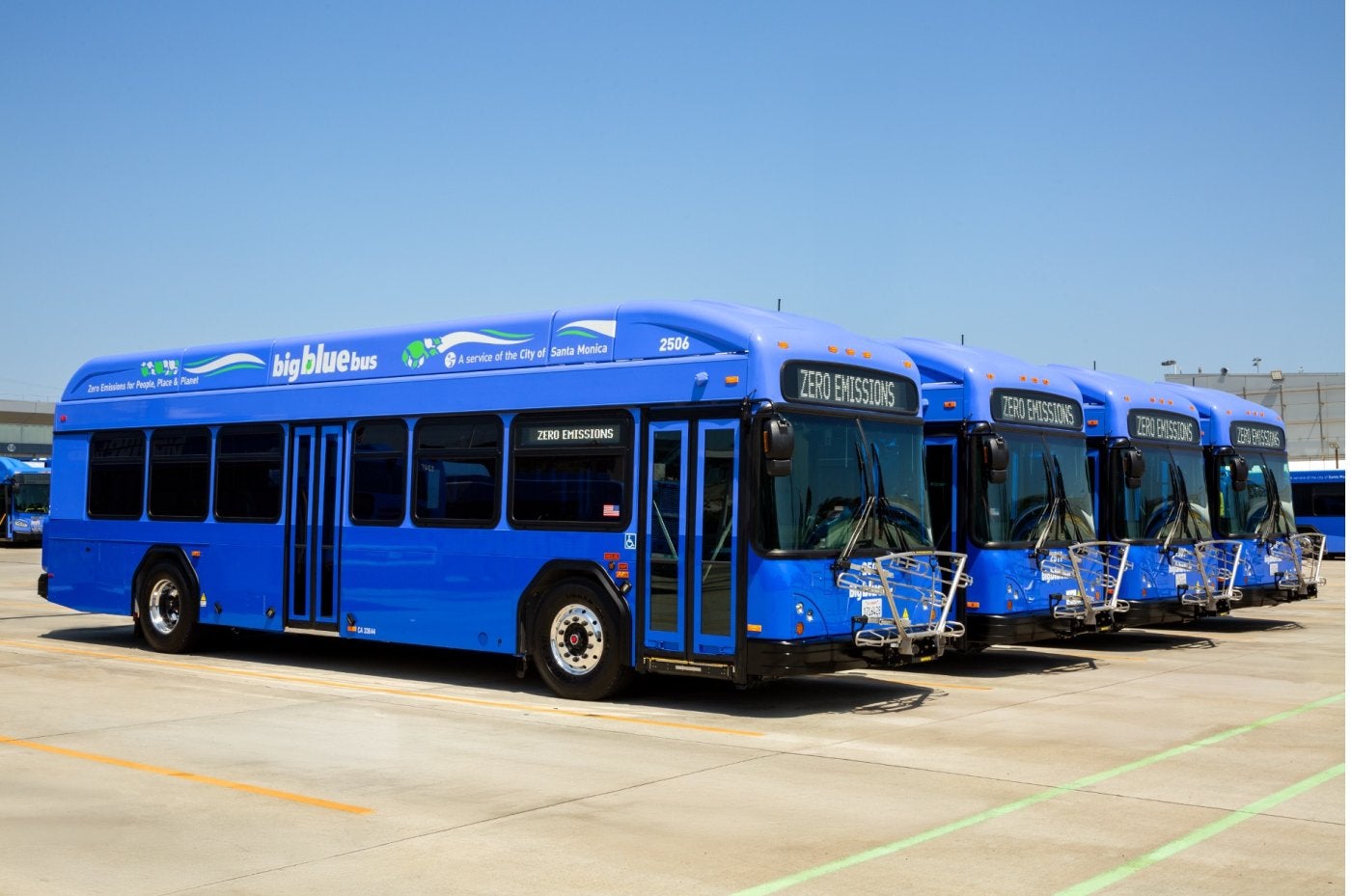
Today's buses are far more capable. The agency's newest buses carry a seventh battery pack, totaling 688 kilowatt-hours, with a range of more than 300 miles. That is enough for two days of service. In stop-and-go urban traffic, regenerative braking helps recharge the batteries along the way. After more than five years in revenue service, the electric fleet's uptime has been comparable to that of its compressed natural gas buses. Preventive maintenance takes approximately 20% less time than on a natural gas bus, and fueling with electricity now is comparable to fueling with natural gas.
O'Connor is candid about the trade-offs. A battery-electric bus costs more to buy than a natural gas bus, and the agency hasn't yet completed a full return-on-investment analysis; it is tracking the data now. But the operating picture is consistent, and the people who drive the buses have weighed in: Big Blue Bus operators consistently say they prefer the battery-electric buses. Riders get a cleaner, quieter and smoother trip.
"For us, the project is not simply about replacing CNG buses with electric buses. It's about transforming the way we operate our transit system while maintaining reliable service for the communities that depend on us."
Eric O'Connor
Assistant Director, Department of Transportation, City of Santa Monica
Will charging fit in a depot that's already full?
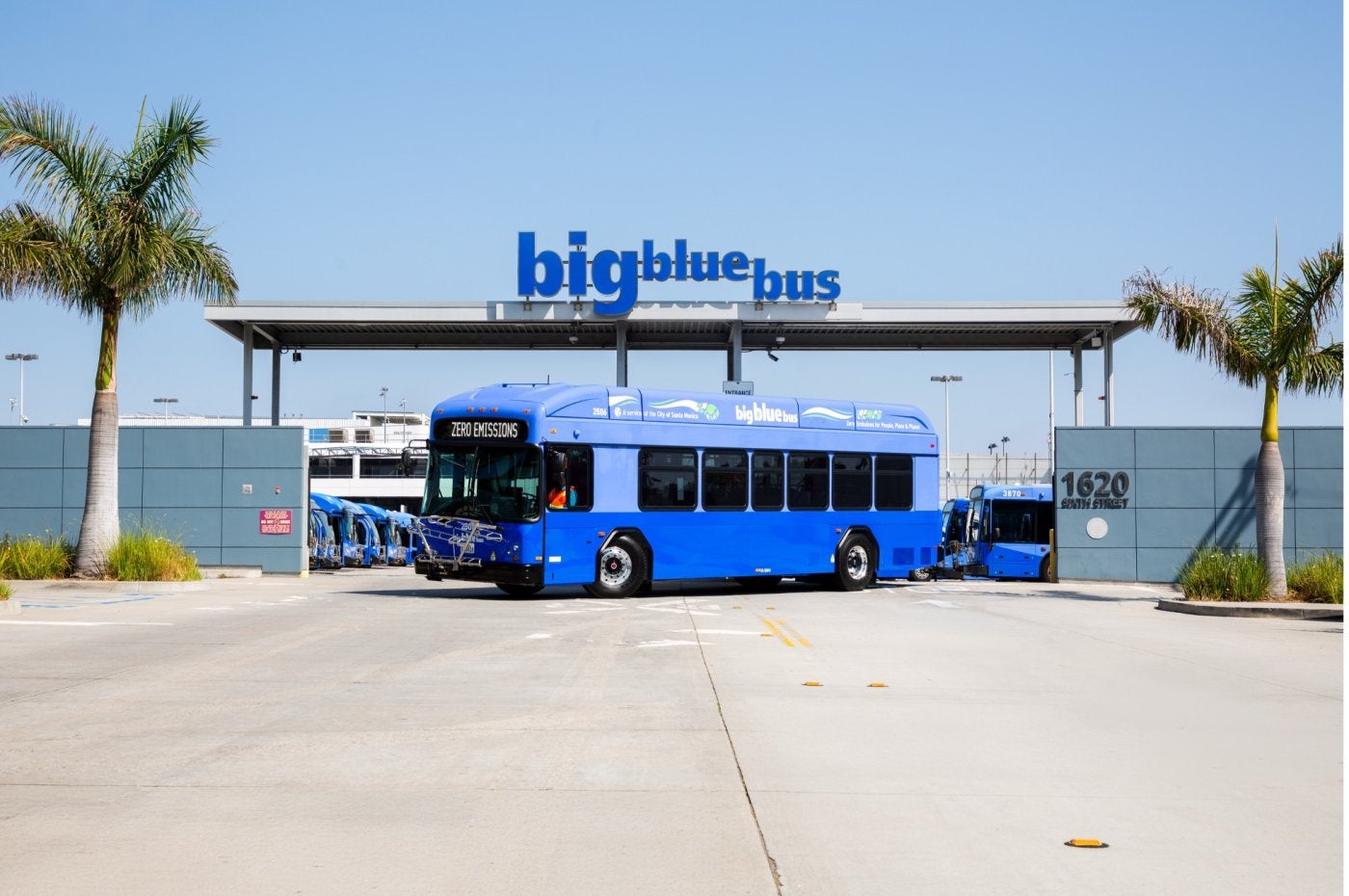
Space was one of the biggest design challenges. The agency's entire facility sits on less than 12 acres that must hold 195 buses, an administration building, a fuel and wash facility and a 20-bay maintenance shop. There was no spare land to build on.
The answer was overhead charging. ChargePoint dispensers hang from a steel structure that spans only the front and rear of parked buses rather than their full length. That preserves the yard's stack-parking configuration, makes the most of limited property and keeps infrastructure costs down. Eaton distribution equipment runs along the perimeter of the property, with ChargePoint charging cabinets protected behind bollards. Big Blue Bus now buys buses with charging access points at both front and rear, and its natural gas infrastructure stays in place throughout the transition, so the two fleets run side by side.
The result: no building modifications and no change to how buses circulate through the yard.
Can you build it without disrupting service?
Big Blue Bus phased its program on purpose. "The phased implementation gives us flexibility as technology continues to advance while allowing us to maintain uninterrupted transit operations," O'Connor said.
Phase one, completed in 2021, installed 20 ChargePoint CP250 depot chargers. They are conjoined so a single bus can draw power from two chargers at once and fully charge in about 4½ hours. Eighteen 40-foot Gillig battery-electric buses entered service in 2021, and the prototype was retrofitted to match them. In 2025, the agency added 15 more buses, each 35 feet long, bringing its electric fleet to 34.
Construction on phases two through six began in April 2026. The overhead canopy is going up incrementally, and buses are still pulling in and out of the yard while crews build around them. When the smaller canopy is commissioned in 2027, Big Blue Bus will be able to charge 60 or more buses at once. At full buildout, the depot will have 45 ChargePoint charging cabinets across three charging yards, overhead ChargePoint dispensers and Eaton electrical service and distribution equipment.
The agency has also designed for what comes next. Two more phases, built as funding becomes available, will add a third canopy and a solar array on the canopy structure. The array is already designed and will help power on-site buildings during the day at a facility that runs around the clock.
How do you pay for it?
Big Blue Bus receives no money from the city's general fund, so every dollar for buses and infrastructure has had to come from fares, transit funding and grants. Its transportation department has pursued nearly every applicable zero-emission grant in parallel with planning and engineering, and it has secured more than $76 million to date.
Phasing is what makes the funding work. Building in stages lets the agency apply for grants as they open and manage cash flow without committing capital ahead of funding. And each completed phase strengthens the next application. Grantors, O'Connor notes, fund agencies that can show they can deliver.
"The ability to demonstrate a track record of implementation to the grantor agencies is just as important as having a compelling vision."
Eric O'Connor
Assistant Director, Department of Transportation, City of Santa Monica
For an agency weighing whether to start, that's an argument for starting early, even if small. A completed first phase is one of the strongest assets a grant application can have.
How long does it take, and who has to run it?
The program spans roughly a decade from policy to full buildout, and that number deserves context. The city's 2016 Zero Carbon 2030 Fleet Plan paces the transition deliberately: Big Blue Bus buys only zero-emission buses as existing buses reach retirement, so no bus is replaced early. The plan is also a living document, built to adapt as battery, charging and vehicle technology improve.
The infrastructure itself moved quickly. Phase one took 18 months, a project O'Connor describes as "pretty straightforward." The agency went from testing a single prototype in 2018 to 19 battery-electric buses in daily service in 2021. Much of the early time went into proving out a brand-new bus, Gillig's first battery-electric model. Agencies starting today begin with mature vehicles and a growing base of proven deployments.
The project is being developed within Big Blue Bus's existing organizational structure. Asked how much additional staff the program required, O'Connor said the agency has added one person, a construction manager. Staff from its engineering firms supplement the team. Existing staff have handled everything else, including maintenance, facilities, grants, finance and community engagement.
Specialist partners carry the rest of the load. Stantec has served as the agency's engineer of record since 2020, Willdan Engineering provides construction management and inspection services, and Big Blue Bus has met with Southern California Edison every two weeks for the past five years while planning and designing this project. ChargePoint and Eaton supply the charging and power infrastructure.
What would O'Connor do differently?
Asked what he'd change, O'Connor didn't hesitate: "I would have started sooner, because I think agencies underestimate the time it takes to do projects like this." Here is what he recommends to any agency getting started, and how Big Blue Bus put each lesson into practice.
- Pilot and model before you commit. Run a bus in service in your own conditions across all four seasons, and model your routes before choosing a bus type or manufacturer. O'Connor is candid that Santa Monica's coastal climate is close to ideal for battery-electric buses, and he advises agencies in colder regions to pilot through their toughest months. ChargePoint depot chargers are deployed with transit agencies in the Northeast and Canada and rated for temperatures as low as minus 40 degrees.
- Plan with a cross-functional team, and plan for contingencies. "You can never plan too much, and you need contingency plans within your plan," O'Connor said. Big Blue Bus built its schedule with safety and training, vehicle and facilities maintenance, planning and operations at the table. Those experts spot operational risks an engineering team may miss.
- Engage third parties early. Go beyond the utility. Bring in your building, public works, fire and police departments early. Each will have legitimate questions, and answering them up front prevents delays later.
- Settle support expectations before equipment arrives. Agree with your vehicle and charging manufacturers on post-delivery support, maintenance, warranty and technical assistance up front. (More on how ChargePoint and Eaton approach this below.)
- Invest early in training. High-voltage safety training and equipment are essential for maintenance and facility staff, and operators and mechanics need training on how electric buses drive and behave. Choosing a legacy bus manufacturer helped. Roughly 80% of the agency's battery-electric bus is common with a conventional natural gas bus, which shortened the learning curve.
- Future-proof as you scale. Design today for the capacity and technologies you'll need later, as Big Blue Bus did with canopy structures already designed to carry solar panels.
- Invest in monitoring technology. Real-time data on vehicle performance, state of charge, charging activity and location turns a new technology into a manageable one. "We can monitor issues in real time and use that information to identify and address problems more quickly," O'Connor said.
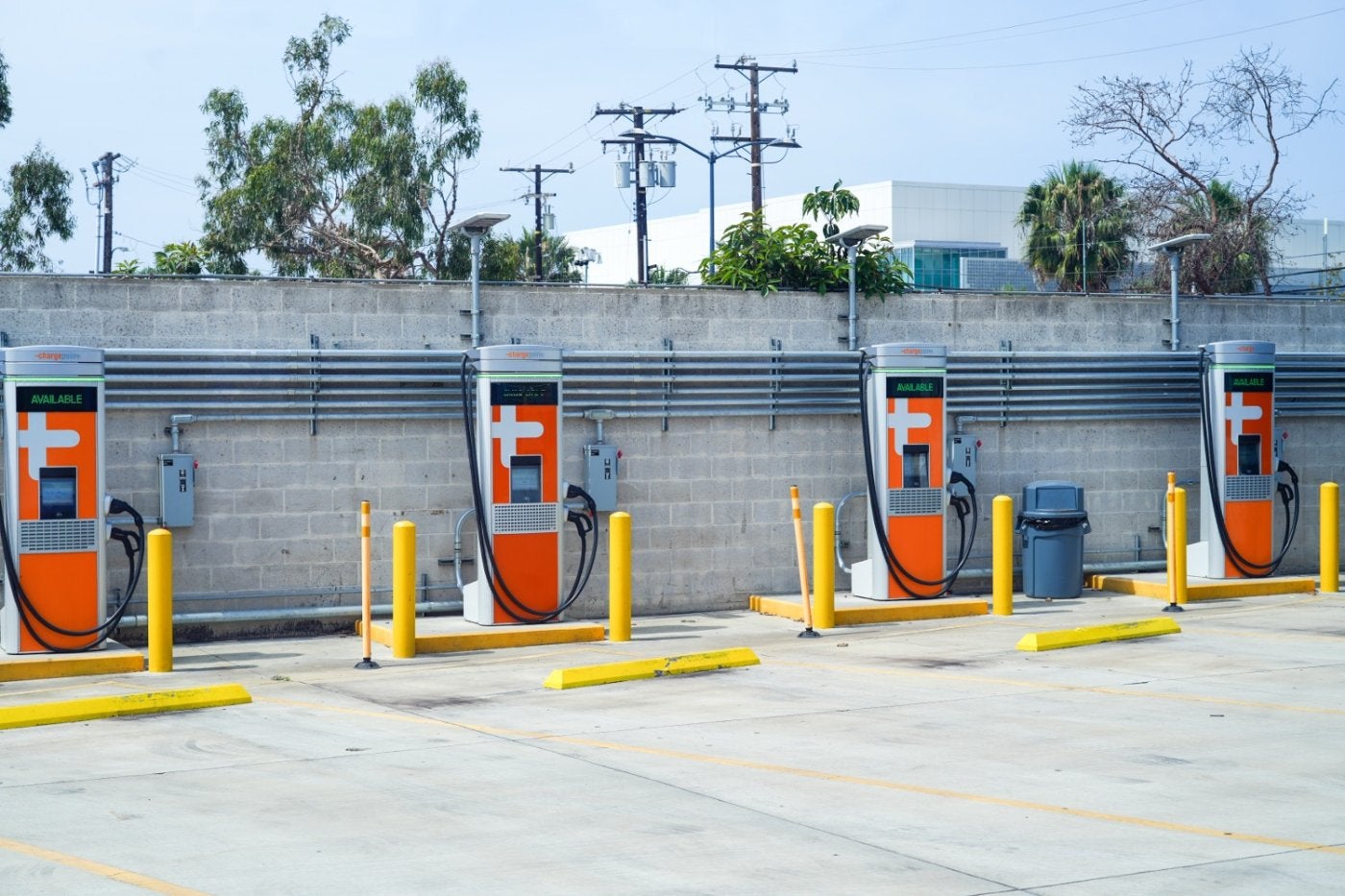
Why did Big Blue Bus choose ChargePoint and Eaton?
ChargePoint has been the agency's charging partner since phase one in 2021 and remains its partner for phases two through six, now under construction. For an agency committing to a multiyear program, that continuity matters as much as any specification. O'Connor calls strong partnerships one of the most important factors in the project's success. Here is where ChargePoint and Eaton have made the difference.
A design that fit the yard. ChargePoint's overhead dispensers and charging cabinets let Big Blue Bus electrify a constrained 12-acre site without modifying its buildings or changing its stack-parking layout.
Engineering alongside the agency. In phase one, ChargePoint and Big Blue Bus engineered a conjoined CP250 configuration so a single bus can pull power from two depot chargers at once. O'Connor noted that ChargePoint and Gillig are both California-based companies, which "provided additional opportunities for collaboration and responsiveness throughout the project."
Visibility into every bus and charger. ChargePoint's charging management software lets the agency monitor state of charge, vehicle health, charging activity and bus location within the yard. O'Connor says that information has become increasingly important as the fleet has grown.
One team from the utility connection to the charge port. Eaton supplies the agency's electrical utility service and distribution equipment. Together, ChargePoint and Eaton offer charging and power infrastructure designed and tested to work as one system, so agencies coordinate with one team instead of separate gear and charger vendors. "As a customer, you have one phone number to call for support if something goes wrong," said Sai Murahari, global product portfolio manager for electric vehicle charging infrastructure at Eaton.
A proven path. More than 70 transit agencies across North America work with ChargePoint, so the approach Big Blue Bus took is one others are following, not a one-off.
"Over the past six years, strong partnerships have been one of the most important factors to the success of this project. We have worked closely with ChargePoint and Eaton, who are providing our charging equipment and key electrical infrastructure components."
Eric O'Connor
Assistant Director, Department of Transportation, City of Santa Monica
Planning your own depot? Every yard is different, with its own acreage, routes, climate and utility. ChargePoint's transit team, working with Eaton's application engineers, can help you model your charging needs, work through your site constraints and build a phasing plan that fits your funding timeline.
Want the full story first? Watch the on-demand webinar with O'Connor, ChargePoint's Amy Blair and Eaton's Sai Murahari.
At ChargePoint, we believe stories have the power to change the world.
Our customers share their stories because they're passionate about the often-unforeseen ways the electrification of transportation has impacted their organizations. E-mobility is here to stay. Perhaps it's time to tell your own story.