

E-mobility is becoming mainstream
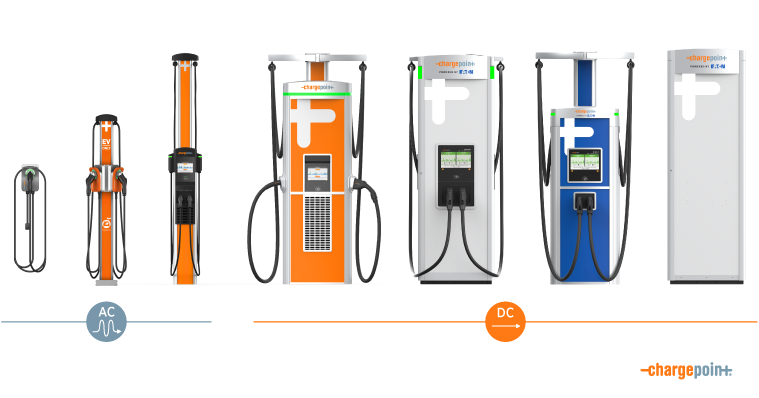
Part of what’s giving so many people the confidence to make the switch to electric transportation is the widespread buildout of Level 2 AC and Level 3 DC fast charging infrastructure at shopping centers, multifamily properties, parking facilities and along highways.
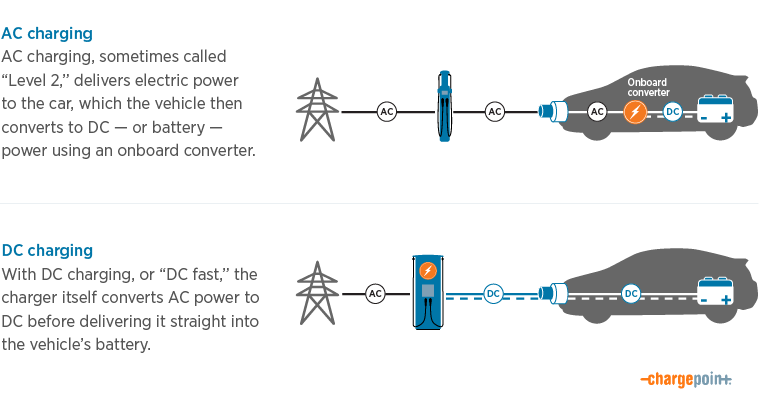
But what are the differences between the two types of charging? It has to do with how electricity from the grid makes its way to an EV’s battery. The power from our energy grid is alternating current (AC), and most power outlets use AC power. Batteries, on the other hand, use direct current (DC) power. When charging an EV, the AC power from the grid must be converted to DC power so it can be stored in the vehicle’s battery.
What about Level 1 charging?
Some drivers may still use Level 1 charging cables at their homes. These require only a 120-volt, 20-amp circuit, which means you can simply plug them into a normal household outlet and connect to an EV at the other end. Level 1 charging speed depends on the type of EV (all-electric or plug-in hybrid), the size of the battery and how much energy the battery has in it. For example, an EV with a 100-mile battery plugged into a Level 1 charging cable can take about 24 hours to fully charge when it’s nearly empty.
How charging speed works
Charging speed is measured in kilowatts (kW), which comes from a combination of voltage and current (kW = volts × amps ÷ 1000).
Think of your car's battery as an empty bottle and the charger as a faucet. The faucet can only supply so much flow, and the bottle can only accept so much through its opening. The actual flow is limited by whichever is lower.
Similarly, an EV charging session is always governed by the lower of two numbers:
- What the charger can deliver (kW): The maximum voltage and current the station can provide
- What the vehicle can accept (kW): The maximum power the battery and onboard systems allow at that moment
For example, a fast charger might be capable of delivering 400 kW, but if your car is only capable of accepting 150 kW, it will only charge at 150 kW.
Not all charging is created equal. The difference between Level 2 AC and DC fast charging comes down to where power is converted and how much voltage and current can be handled.
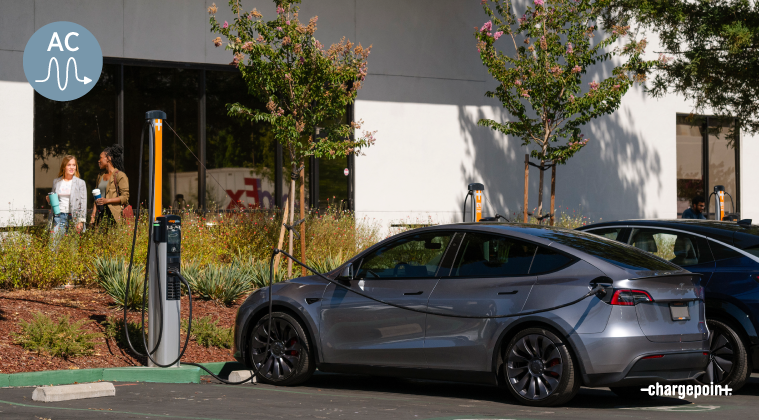
- Level 2 AC charging: When an EV plugs into a Level 2 AC station, the vehicle converts AC power from the grid into the DC power the battery uses. This is done by the onboard charger, which has to fit inside the vehicle and is limited in size, cooling, and electrical capacity. As a result, most EVs charge at about 7.2–19.2 kW on Level 2 .
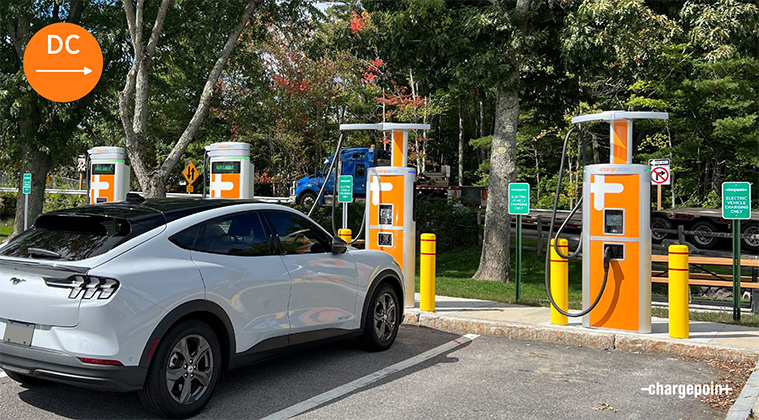
- DC fast charging: Here, the station handles the AC-to-DC conversion and sends DC power directly to the battery, bypassing the onboard charger. Because this equipment is much larger and better cooled, it can deliver far higher voltage and current (often hundreds of amps at several hundred volts). That combination is what enables much higher kW — and significantly faster charging speeds.
When to choose Level 2 AC charging
- At work or home. Level 2 charging stations are great for when you park your car in one spot for more than two hours. EVs can reach a full charge from a Level 2 charging station in just a few hours or overnight, depending on the vehicle type and battery size.
- While running errands. These charging stations can provide up to 35 or 40 miles of range per hour (RPH), which makes them convenient for use while shopping or dining. Since most people run errands within 20 miles of their home, even a brief top off can provide enough juice to get you to the next stop.
When to choose DC fast charging
- On a road trip. DC fast stations can charge an EV to 80% in as little as 20 minutes, making DC fast chargers a great choice during extended journeys when you want to refuel and get back on the road quickly.
- When you’re in a real hurry. If your battery is very low and you need to get somewhere quickly, DC fast charging can be a lifesaver.
- When driving a fleet vehicle for work. To keep vehicles charged up around the clock, DC fast stations allow fleet drivers to charge up quickly in depots or at public stations along driving routes.
Why faster is not always better
- It’s more expensive. Because DC fast stations require more power supply, they are more expensive for station owners to operate. These costs are passed on to drivers in the form of higher charging fees.
- It can impact your battery’s lifespan. A lot of power flows from a DC fast charger, and managing it puts extra strain on some EV batteries — potentially reducing the battery’s efficiency and overall lifespan.
- Not all EVs can take a fast charge. Not all EVs come with a DC fast charging port, so some drivers will not be able to use them at all. This limitation will likely disappear as automakers evolve their standards.
Get more detail on how DC fast charging works.


