
Electric Fleets Run on More Than Just Chargers
DC fast charging, energy management, and infrastructure planning in one solution, helping you keep vehicles ready, costs predictable, and depots scaled as you grow.

Who we serve
One complete charging solution for every fleet
From enterprise and municipal fleets to public transit, ChargePoint brings together charging infrastructure, software, energy management, and proven fleet expertise to keep operations running efficiently.
Enterprise Fleets
Cut downtime, control energy costs, and start every shift charged with one integrated system that scales across your sites.
Municipal Fleets
Turn funding into working infrastructure on time and on budget with a charging platform built to serve all vehicles for the long term.
Transit
Power 100+ buses without demand surcharges thanks to automated charging and advanced energy management that puts you in control.


"The best part about the ChargePoint solution is that we can set it and just monitor it. Having everything connected on a single network has been key. We check the dashboard every morning to make sure things are running smoothly."
Jim Gamboa, Electric Vehicle Coordinator - County of San Diego.
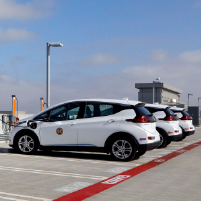
The cost advantage
Fleets that connect charging, energy, and software lower TCO and drive greater ROI
ChargePoint brings high-performance charging, intelligent energy management, fleet software, and operational controls together to optimize every kilowatt, increase vehicle readiness and reduce the cost of running an electric fleet.
47%
Fleets planning EV adoption
The question is no longer "if," it’s "how fast" and "with whom."
90%
Lower demand charges
Intelligent energy management protects the bottom line and dynamic load management allocates power by business priority.
9%
Lower fleet TCO
Integrated charging infrastructure delivers lower total cost of ownership than charger only approaches.
$524B
Investment by 2035
The charging infrastructure you choose today defines your fleet economics for 10-20 years. Getting it right the first time matters.
Sources: McKinsey, RMI, NREL, BloombergNEF
The system advantage
The value isn't in one charger. It's in the system around it.
Most fleets are still treating charging like a hardware purchase. Without the right system, energy costs spike, infrastructure can't grow, and your electrification program underperforms the fleet it was built to replace. ChargePoint builds charging operations — hardware, software, and services into one platform that keeps vehicles ready and energy costs predictable, and turns fleet charging into an operational advantage.
Start every shift charged and ready
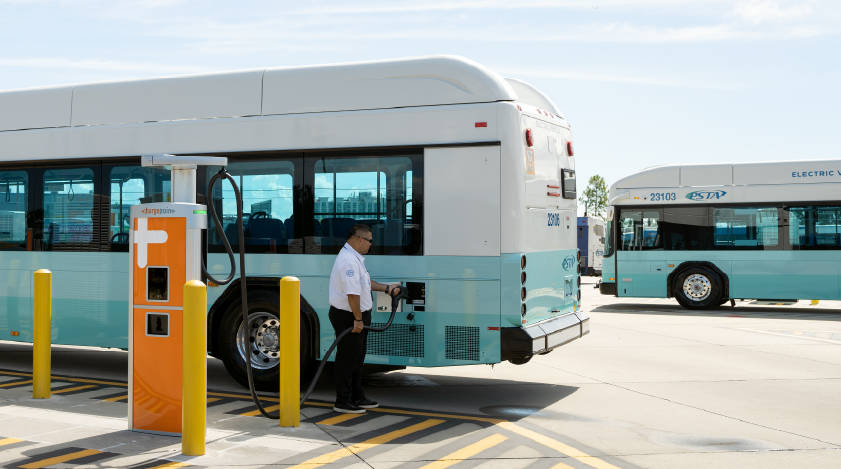
No two fleets charge the same way. Some need reliable overnight depot charging. Others, like continuous-duty operations and autonomous vehicles, need to power up and get back on the road in minutes. We match the right charger to your power efficiency and performance needs, from cost-effective Level 2 charging to Express Solo, the world's fastest standalone DC charger.
Predict and control demand charges
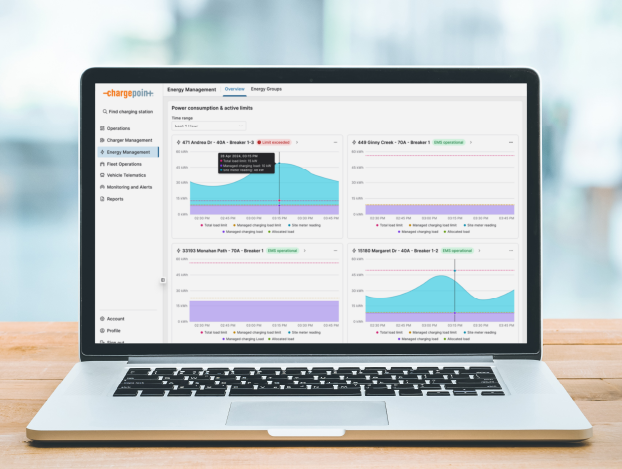
Demand surcharges spike with every new vehicle you add. When energy is allocated by business priority and scheduling is automated around departure times, charging costs drop up to 30%, demand charges drop up to 90%, and fleet TCO improves by 9%.
Add ports and power without the rework
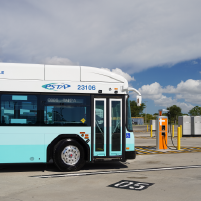
The depot you build for 20 vehicles needs to handle 200 without a redesign. ChargePoint covers the full lifecycle: site assessment, power planning, deployment, operations, and expansion. This infrastructure decision you make today still works in 10 years. With Eaton, charging and electrical infrastructure come together as one integrated build so your site works on day one and grows with your fleet without rework.

"ChargePoint was able to check all of the boxes for our requirements but most important to go the long haul and meet our goals. There’s no better people to maintain the equipment than the people who built the equipment. For as long as we want to run the vehicles, which is typically 18 years, the charging provider needs to be around."
Henry Lukasik, Director of Maintenance - PSTA
What goes into your depot
Everything your fleet needs to charge from one partner
From Level 2 overnight charging to DC fast charging with up to 600 kW, plus fleet software and energy intelligence.
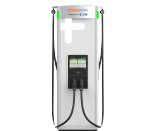
Express Solo
When you need maximum power per vehicle with fewer maintenance headaches. Air-cooled, no coolant, no pumps, fewer failure points.
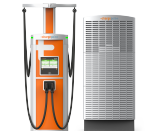
Express Plus
When you're charging multiple vehicles and need to grow. One Power Block feeds up to 8 dispensers. Add capacity without adding circuits.
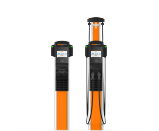
CP6000
For vehicles that sit overnight or during long shifts. Reliable Level 2 AC charging at a lower cost per port.
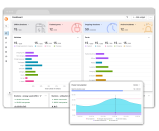
Fleet Software
The dashboard where you see it all: vehicle readiness, energy use, load balancing, and reporting for your ICE and electric vehicles together.

Services
Ensure reliability and unlock the full potential of your charging program with advanced support, consulting, and deployment services.
Our commitment
We're invested in making your fleet successful
Every project starts with your goals, not a product catalog. We plan it, build it, keep it running, and grow it with you.
Plan
Site assessment, energy modeling, electrical design, utility coordination, and funding alignment.
Build
Permitting, construction, hardware installation, software configuration, fleet system integration.
Run
Fleet software for readiness and energy management. AI for insights. Assure monitoring for uptime.
Grow
Add vehicles, expand sites, increase capacity. Same system. Same partner. Lower cost per vehicle at scale.
Ready to charge?
Talk to an EV charging expert who can help you evaluate your EV charging needs and match you with the right solution.
406K+
activated ChargePoint ports
453M
charges delivered (and counting)
82%
of the Fortune 50 are ChargePoint customers

Common Questions
Questions fleet operators ask us most
How do I keep every vehicle charged and ready for morning pull-out?
Charging schedules are built around your departure times — not just first-come, first-served. The software monitors every vehicle's state of charge in real time, predicts whether each one will be ready, and sends role-based alerts if something won't make the window. Telematics integration ties charging directly to fleet operations. One dashboard for ICE and electric vehicles together — see what's charged, what's ready, what failed.
How do I control energy costs when charging a fleet?
Energy is the new fuel cost — and without intelligent controls, it's unmanaged. Dynamic load management allocates power by business priority. Site-level consumption limits avoid demand surcharges. Fleets using ChargePoint energy management have seen up to 90% lower demand charges and charging costs cut up to 30%. With Express, one Power Block distributes energy across up to 6 dispensers — more vehicles, less electrical capacity needed.
Can I add more chargers without upgrading my electrical service?
In most cases, yes. Express uses modular power-sharing architecture — you add dispensers, not circuits. Combined with energy management that sequences charging overnight and balances load, most depots can support 2-3x more vehicles on existing electrical capacity without a costly utility upgrade.
How much does fleet charging infrastructure cost?
It depends on your fleet size, power requirements, site capacity, and how fast you're scaling. Integrated charging infrastructure can deliver 9% lower fleet TCO compared to charger-only approaches. The 30C federal tax credit can cover up to 30% of infrastructure costs — and grant programs have application windows that open and close, so timing matters.
What happens when a charger goes down?
Your chargers are monitored 24/7 with proactive diagnostics. Assure Pro guarantees one-business-day resolution with extended parts and labor coverage. Air-cooled hardware means fewer failure points — no coolant leaks, no pump failures.
How long does it take to charge a fleet vehicle with DC fast charging?
Express Solo delivers up to 600 kW per port— adding up to 200 miles of range in 10 minutes to select passenger vehicles. A transit bus with a 400+ kWh battery charges overnight or receives a mid-route boost in 10-20 minutes. The message isn't speed — it's fleet performance.
How do ChargePoint and Eaton work together for fleet charging?
One partner. One system. Full lifecycle. ChargePoint handles charging hardware, fleet software, and energy intelligence. Eaton handles electrical distribution, power management, and site-level infrastructure. Together, they co-engineer your site from power capacity planning through commissioning — no fragmented vendors, no deployment risk.
How do I justify the upfront cost of fleet charging infrastructure?
The ROI isn't in the charger — it's in the system. 9% lower fleet TCO. The 30C tax credit covers up to 30% of infrastructure costs. The cost of waiting: higher redesign costs, energy waste, missed funding windows, and stranded assets.